Right here in Florida, we house more than six thousand West Indian Manatee: an astoundingly massive marine mammal. Manatees have elephant-like skin, a round tail-like appendage called a fluke, and two flippers on their belly side, each with fingernails (or flipper nails!).

Manatees are Related to Elephants
The faces of these majestic creatures have two little eyes settled into their head, a large snout with two nostrils at the end, and a whisker-covered mouth. Manatees are the only marine mammals left in existence who are herbivores, and believe it or not, their closest living relative is the elephant!
Many West Indian Manatees Reside in the Indian River
Many West Indian manatees reside in the Indian River Lagoon System, which takes up a large portion of Florida’s east coast covering over two thousand square miles. These marine mammals were taken off the endangered species list back in 2017 but remain threatened. This means that we cannot hunt, feed, chase, or give water to manatees we encounter.
To Protect Manatees, Many Areas Have Speed Limits
Many areas in the lagoon call for reduced boat speed to protect manatees due to many accidents between a manatee and boat propellers, as manatees tend to stay in the deep boating channels of the lagoon. They have no known predators besides humans, and humanity is now doing its best to keep these fantastic animals alive.

A Common Sight on the Indian River
You have a good chance of seeing these massive mammals on our daytime kayak tours in the Indian River Lagoon System. Even though most adult manatees weigh around one thousand pounds, they are very gentle beings and entirely safe to be around. The only worry we have is kayaking onto a manatee’s back and startling it, thus risking being flipped out of your kayak and swimming in the water.
Join Us on a Kayak Tour, Where We Often See Manatees
We often spot manatees on our tours through the Cocoa Beach Thousand Islands so if you want a chance to experience the West Indian Manatee in person, come join us on a daytime kayaking adventure through the Indian River Lagoon System!
A Curious and Playful Manatee
Our entire kayak tour group loved this curious and playful manatee who approached our group and began to play with our boats. Seeing one or a group of these animals is a beautiful experience. Check out the pictures below of the manatee interacting with our kayak tour group. You can click on them to view the larger images.

Curious West Indian Manatee
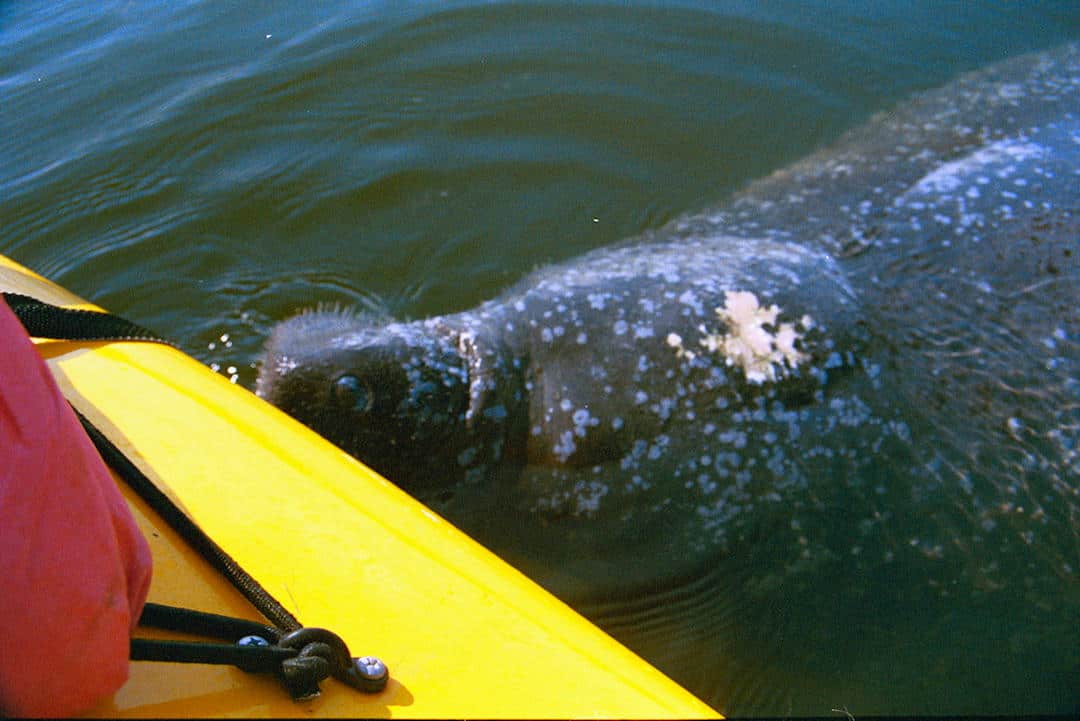
Curious Manatee Approaches Kayak
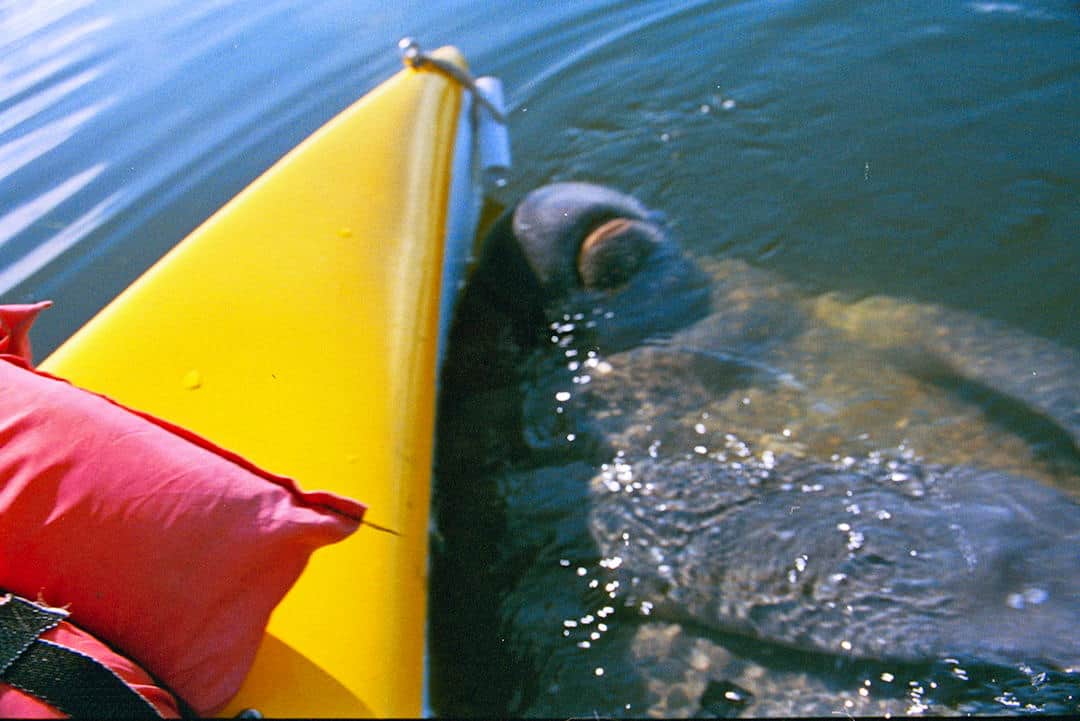
Playful West Indian Manatee

Closeup Picture Of Playful Manatee
Question
What do you do when you see one of these beautiful creatures?
Answer
Smile, of course. : )
Quick Manatee Facts
- Florida has more than six thousand West Indian manatees.
- Manatees range from 9-10 feet long and weigh around 1,000 pounds, with some growing up to 13 ft and weighing 3,500 lbs
- The closest living relative of the manatee is the elephant.
- At the end of each flipper, they have flipper nails resembling an elephant foot and still use their nails to grip along the bottom of the lagoon.
- Manatees are thought to have evolved into marine mammals because, at one point, they had four legs and were land animals.
- Manatees can hold their breath for up to 20 minutes. However, they typically come up around every 3 minutes.
- Manatees can swim at speeds up to 19 mph.
- Manatees migrate once the Indian river lagoon system drops below 68 F Manatees will migrate to warmer waters such as freshwater springs, power plants that produce warm water, or canals where they can share each other’s body heat.
- Manatees live in matriarchal societies, females lead the migrations.
- Manatees typically eat 10-15% of their body weight daily, usually equating to 100-200 lbs of vegetation. They are one of the only aquatic mammals to be herbivores. Manatees live 50 to 60 years.